Insurance & Public Adjuster workflow

Commercial Roof Storm Damage? We Handle the Insurance Side.

We work directly with carriers and Public Adjusters on HOA and apartment roof claims across Minnesota, South Dakota, North Dakota, Wisconsin, and Iowa. Xactimate-formatted scope, supplement negotiation, code-upgrade documentation, depreciation recovery — your board doesn't translate roofing into adjuster-ese, we do.

Free roof inspection and claim viability assessment. No obligation.

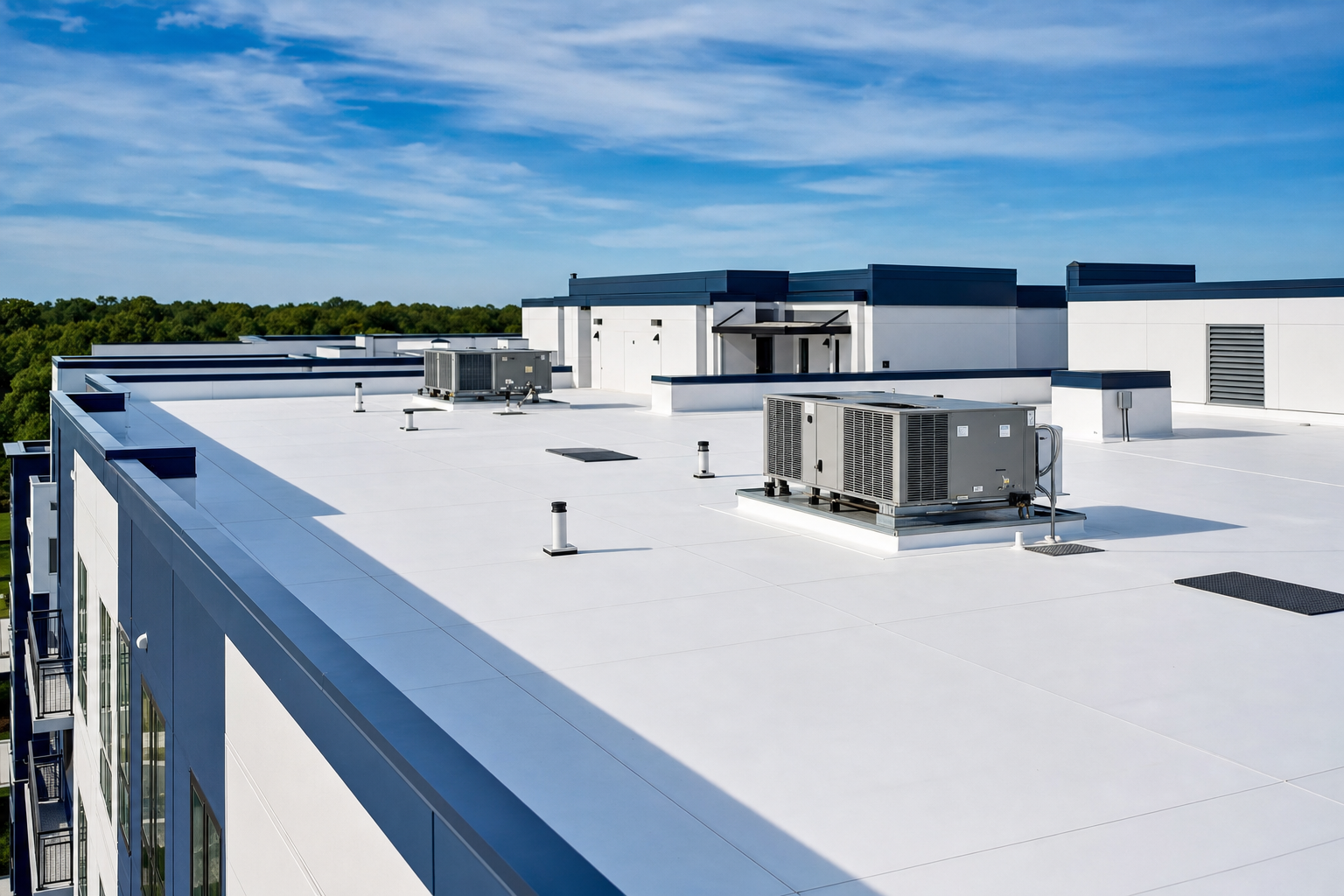
A union crew inspecting a flat commercial TPO roof for hail and storm damage on a multi-unit apartment building
Hundreds of HOA & apartment claims handled
MBE Certified MCUP Certified Union Labor Insurance & PA Approved BBB Accredited $5M GL Insurance
What we do

What “Handling the Insurance Side” Actually Means

Carrier Communication

We talk to State Farm, Allstate, Travelers, Cincinnati, Westfield, Auto-Owners, and the rest of them every week. Your board doesn't get cc'd on adjuster threads. We handle scope arguments, photo requests, supplement submissions, and final settlement negotiation.

Xactimate-Formatted Scope

Adjusters live in Xactimate. We document damage in Xactimate format from the field — line items, unit prices, code upgrades, O&P — so the carrier can't reject scope on formatting grounds.

Public Adjuster Coordination

If your board has retained a Public Adjuster (or should), we coordinate the project scope with their claim strategy. PAs love working with contractors who speak their language; most don't.

The claim process

How a Storm-Damage Claim Actually Works

  1. Free Roof Inspection

    Day 0 – Day 3

    We walk the roof — usually with drone for portfolio properties — and document hail strikes, wind damage, soft metals, and pre-existing condition. You get a written viability assessment: is there enough damage for a claim, or are we wasting your board's time?

  2. Claim Viability Decision

    Day 3 – Day 5

    We tell you straight whether a claim will likely be approved. If the damage is marginal, we say so. Filing a claim that gets denied counts against your loss history and can affect future premiums — we don't waste that for a $15K repair.

  3. Claim Filing + Adjuster Meeting

    Week 1 – Week 3

    Your board (or property manager) files the claim. We attend the adjuster inspection, walk the roof with them, and document the scope they identify. This is where most contractors leave money on the table — we don't.

  4. Scope Review + Supplements

    Week 2 – Week 6

    The adjuster's initial scope is almost always incomplete. We submit supplements for missed scope (flashing, edge metal, ridge vent, drip edge, ice & water barrier, code-required upgrades). Typical supplement adds 20–40% to initial settlement.

  5. Settlement + ACV → RCV Recovery

    Week 4 – Week 10

    Most policies pay Actual Cash Value (ACV) upfront and Replacement Cost Value (RCV) after work is complete. We help your board navigate the depreciation recovery process — most boards lose 15–30% of their settlement here by not filing RCV properly.

  6. Project Execution + Closeout

    Week 6 – Week 16

    Same as any project — union crews, daily supervision, weekly board updates, final walkthrough, warranty registration, lien waivers. Plus a complete claim file (photos, Xactimate, supplements, settlements) the board can hand to their auditor.

Public Adjusters

Working with Public Adjusters

Most boards don't know what a Public Adjuster is. PAs are licensed insurance professionals who represent the policyholder — your HOA — instead of the carrier. They typically charge 8–12% of the settlement and add far more than that in recovered scope and supplements on big claims (anything over $200K is usually worth it). We have established working relationships with PAs across Minnesota, South Dakota, North Dakota, Wisconsin, and Iowa.

  • We coordinate directly with your retained PA
  • We share scope documentation in PA-preferred format
  • We refer to vetted PAs when claims warrant it
  • We never take referral fees from PAs (potential conflict)
  • Your PA gets paid from the settlement, not your board
A roofing project manager coordinating a storm-damage insurance claim and Public Adjuster strategy with HOA board members
Carriers

Carriers We've Negotiated With

  • State Farm
  • Allstate
  • Travelers
  • Cincinnati
  • Westfield
  • Auto-Owners
  • Liberty Mutual
  • The Hartford
  • Nationwide
  • Farmers
  • Chubb
  • Zurich
  • Philadelphia Insurance
  • Great American
  • QBE
  • Hanover

If your carrier isn't listed, we've probably still handled a claim with them — ask.

Questions from boards

Common Questions from Boards

Depends on three things: deductible vs likely settlement, your loss history with the carrier, and the age of your roof. A 25-year-old roof with $40K of hail damage and a $25K deductible is rarely worth filing — the deductible eats most of it and the claim hits your loss history. A 12-year-old roof with $200K of hail damage and a $25K deductible is almost always worth filing. We give you the math before you decide.
ACV (Actual Cash Value) is what your roof is worth today after depreciation. RCV (Replacement Cost Value) is what it costs to replace new. A 15-year-old asphalt shingle roof might have an ACV of $40K and an RCV of $120K — your carrier pays ACV upfront, then pays the remaining $80K only after the work is actually completed and you file for RCV recovery. Most boards lose this $80K by missing the RCV filing deadline.
On claims under $100K, usually no — the PA fee outweighs the recovery. On claims over $200K, almost always yes — a good PA recovers 20–40% more than the carrier's initial offer, far more than their 8–12% fee. We can refer you to PAs we've worked with.
Adjusters often write only the visibly damaged slopes on initial inspection. But replacing 3 of 8 slopes leaves you with a roof that has 3 new sections and 5 old sections — different age, different warranty, mismatched color, and matching limitations under your policy. We supplement for matching limitations and code-required uniform roof systems where applicable.
Minnesota and most Upper Midwest states give you 1–2 years to file from the date of the storm, but you should file within 60–90 days. Delays make it harder to prove storm causation and easier for the carrier to argue 'pre-existing condition.'
Denials happen most often on marginal damage or when the carrier disputes storm date. We re-inspect with the denial in hand, document any new evidence, and submit a formal supplement with the disputed scope. If the denial holds, the next step is either a Public Adjuster or an appraisal clause invocation — both worth pursuing on commercial claims.
On a commercial policy, a single hail claim typically does not raise premiums significantly, especially if it's the first claim in a 5-year window. Multiple claims in a short window will. Carriers care more about loss ratio over time than any single event.
No. The inspection and claim viability assessment are free. We earn our work on the project itself, not the claim handling.

Storm hit your property? Don't fight your carrier alone.

Free roof inspection. Free claim viability assessment. No obligation. We'll tell you whether the claim is worth filing before you commit to anything.